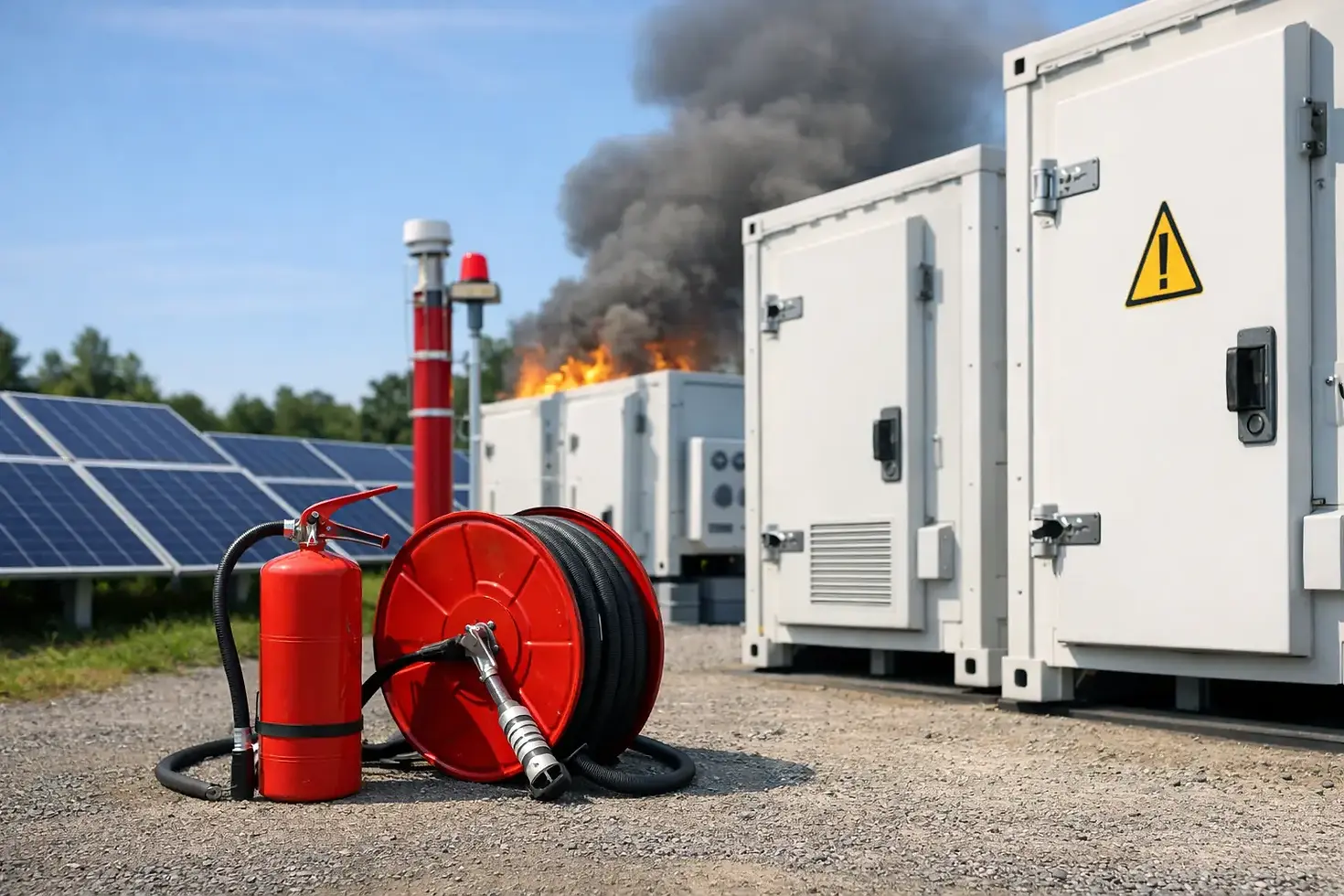
Solar Battery Fire Prevention for Safer Sites
- David Pugh

- 2 hours ago
- 5 min read
A battery container can appear completely normal while a cell is already failing inside it. Long before visible smoke, flame or a fire alarm activation, lithium-ion batteries may release hydrogen, VOCs and electrolyte vapours as internal damage develops. Effective solar battery fire prevention therefore starts with detecting these early warning signals, not simply responding once combustion has begun.
For solar farms, commercial energy storage and behind-the-meter BESS installations, this distinction is operationally critical. A thermal runaway event can damage high-value assets, interrupt generation or site operations, expose personnel to hazardous gases and trigger lengthy recovery, investigation and insurance processes. Fire suppression remains necessary, but it is the last line of defence. Earlier intervention gives operators options.
Why solar battery fires are difficult to manage
Lithium-ion battery failures rarely follow one simple path. A cell can be compromised by manufacturing defects, physical damage, overheating, water ingress, inadequate cooling, electrical faults, overcharging, installation errors or progressive ageing. A single failing cell can generate heat and flammable gases, then transfer heat to adjacent cells in a process known as thermal runaway propagation.
By the time smoke is present, conditions may already be severe. Conventional smoke detection can be limited in battery enclosures because it is designed to identify combustion products, while a battery may off-gas for a period before smoke or flame occurs. Temperature monitoring is also valuable, but ambient or cabinet-level temperature can lag behind an internal cell failure, particularly in large racks or ventilated containers.
This does not mean that smoke, heat and fire detection should be removed. It means they should sit within a layered safety strategy. The earlier a developing failure is identified, the more likely a site team or automated control system can isolate equipment, stop charging or discharging, increase ventilation, initiate a controlled shutdown and protect neighbouring assets.
Solar battery fire prevention needs early off-gas detection
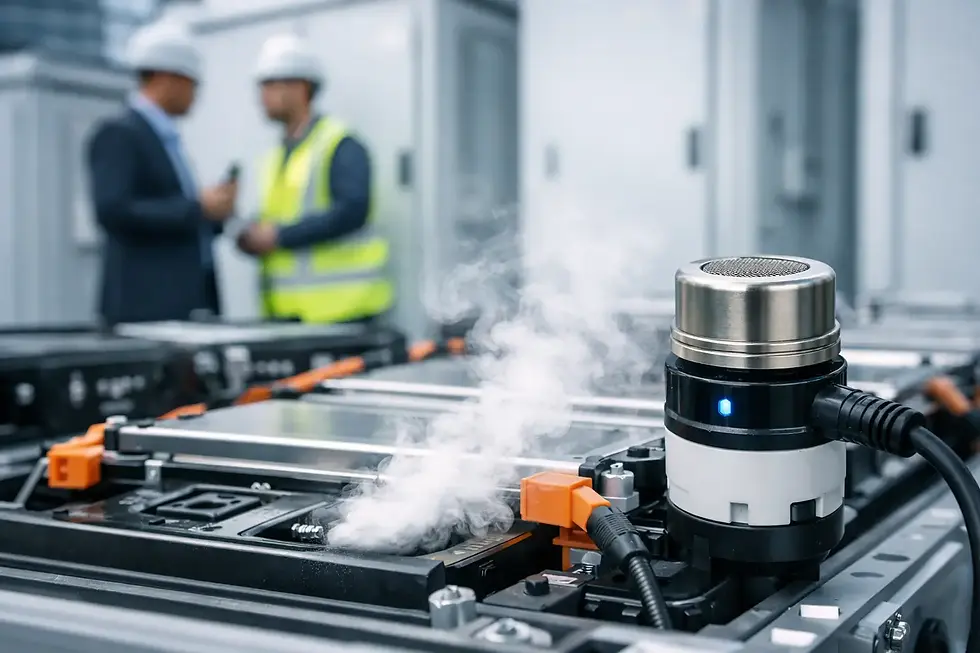
The most meaningful warning signs of an emerging lithium-ion battery failure can be invisible. Changes in hydrogen concentration, volatile organic compounds, electrolyte vapours, humidity and temperature can indicate abnormal battery conditions before a thermal event reaches the smoke or flame stage.
An off-gas detection system is designed to monitor for these indicators within the battery environment. In a BESS container, switchroom, UPS room or battery enclosure, sensors should be positioned where gases are most likely to accumulate or move through the ventilation path. Placement must account for enclosure geometry, airflow, battery rack layout, HVAC operation and any compartmentalisation. A detector installed without understanding these conditions can provide a false sense of security.
For industrial applications, the Evikon E2673 supplied by NexaGuard Systems provides monitoring for hydrogen and electrolyte-related off-gassing indicators, alongside humidity and temperature changes associated with failing lithium batteries. Relay outputs and Modbus RTU compatibility allow early warnings to be integrated into a BMS, SCADA platform, building management system or site alarm strategy. That integration turns detection into action rather than another isolated alarm point.
Build alarms around decisions, not just thresholds
A detector is only as useful as the response it initiates. Alarm logic should be developed with the battery integrator, fire engineer, electrical engineer and operations team. The appropriate response depends on the battery chemistry, container design, installed controls and the operating environment.
A staged alarm philosophy is often more practical than a single high-level alarm. An initial abnormal-gas warning might notify the control room and prompt an inspection under a documented procedure. A confirmed or escalating event may trigger battery isolation, charging inhibition, HVAC changes, remote emergency notification or evacuation controls. Critical thresholds may require emergency services notification and implementation of the site emergency plan.
The objective is not to automate every response without judgement. It is to ensure operators have clear, timely information and that controls activate quickly when personnel cannot safely intervene. Alarm setpoints, delays and escalation rules should be documented, tested and reviewed whenever the BESS configuration changes.
Design out preventable battery risk
Detection is an essential safety layer, but solar battery fire prevention begins earlier in procurement, design and commissioning. Asset owners should assess safety performance as a whole-system issue, rather than relying on a battery cabinet rating or a single protection device.
Key controls include selecting reputable, appropriately certified battery equipment; verifying electrical protection and earthing; maintaining suitable separation between BESS assets and occupied buildings; and providing access for inspection and emergency response. Container ventilation, thermal management and fire-rated barriers should be engineered for the installed system rather than treated as generic additions.
Site conditions matter. A battery enclosure exposed to high ambient temperatures, dust, salt air or heavy rain requires different maintenance attention from a controlled indoor installation. In many Australian locations, sustained heat can increase cooling demand and reveal weaknesses in HVAC performance. In coastal or remote solar projects, corrosion, vermin, dust loading and delayed access to specialist technicians may also affect risk controls.
Commissioning should confirm more than charge and discharge performance. Test alarm pathways, relay functions, SCADA communications, remote notification, HVAC interlocks and shutdown sequences. A fault that is visible in a commissioning test is far easier to correct than one discovered during an event.
Maintenance protects both safety and uptime
Battery safety systems need planned verification. Sensors, communications devices, ventilation equipment, suppression systems and emergency controls can all degrade or be bypassed during routine site changes. A maintenance programme should include functional testing, calibration or replacement in accordance with manufacturer requirements, inspection of enclosure seals and cable penetrations, and review of alarm records.
Trend data can be particularly valuable. Repeated low-level gas alerts, elevated humidity, rising temperatures or intermittent communications faults may not demand an emergency response on their own, but they can indicate a developing issue. Reviewing these trends alongside BMS data, cooling system performance and maintenance records helps operations teams distinguish nuisance alarms from meaningful deterioration.
Housekeeping also deserves attention. Keep access ways clear, prevent storage of combustible materials around battery enclosures, control unauthorised access and ensure signage remains legible. For smaller commercial and residential systems, avoid charging damaged batteries in enclosed spaces and do not use swollen, overheated or physically compromised battery packs.
Prepare people for the first critical minutes
Emergency planning should recognise that lithium-ion incidents differ from ordinary electrical fires. Thermal runaway can produce toxic and flammable gases, reignition risk and rapid escalation. Site personnel need clear instructions on when to investigate, when to isolate equipment, when to evacuate and when to call emergency services.
Plans should be developed with relevant emergency responders and reflect the actual site layout, battery chemistry, installed suppression arrangements and access constraints. Provide current system information, isolation points and contact details. Contractors should also understand the rules before beginning work near battery assets, particularly when drilling, welding, modifying cable routes or working on HVAC equipment.
A practical hierarchy for solar battery fire prevention
A strong strategy uses multiple layers that support one another:
quality battery selection, correct installation and engineered thermal management;
BMS monitoring, electrical protection and controlled isolation capability;
early off-gas detection for hydrogen, VOCs and electrolyte vapours;
smoke, heat and fire detection, with appropriate suppression and ventilation controls;
tested SCADA or BMS alarm integration, emergency procedures and maintenance.
No single layer can eliminate risk. The right combination depends on system size, chemistry, container design, occupancy, proximity to critical operations and local emergency-response capability. For a utility-scale BESS, early warning and automated integration may be central to protecting operational continuity. For a home battery, compact early detection and safe charging practices may provide the most immediate benefit.
The key principle is straightforward: a battery event is most manageable while it is still a warning, not an emergency. Designing for that earlier moment gives people, systems and responders the time they need to protect the site.


Comments